Case Study · 2025
Low Carbon Design — Checkout UX
A redesign of The Body Shop’s checkout experience focused on reducing carbon impact while improving usability, clarity, and performance.
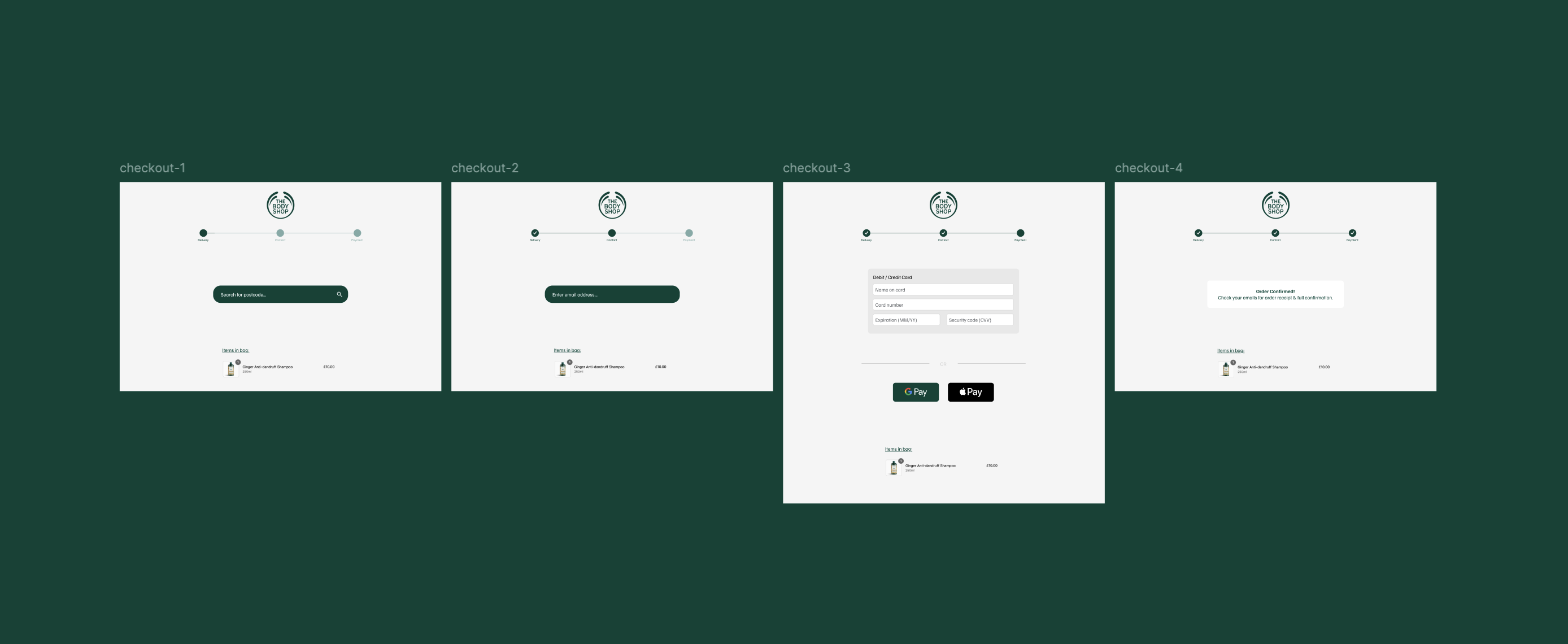
This project explored how digital product design can reduce environmental impact. I selected The Body Shop — a brand known for sustainability — and identified a gap between its values and its digital performance.
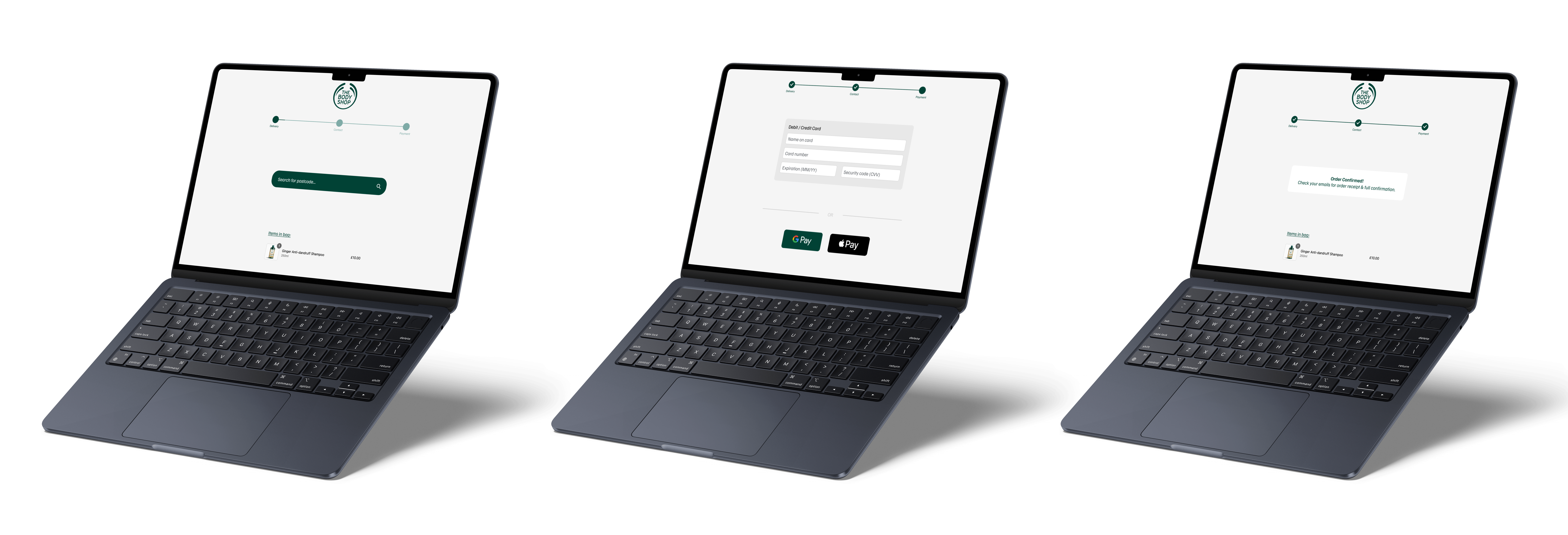
The goal was to redesign the checkout journey to reduce cognitive load, improve usability, and minimise carbon emissions through lighter, more efficient design.
01 — Context
Sustainability wasn’t reflected in the product
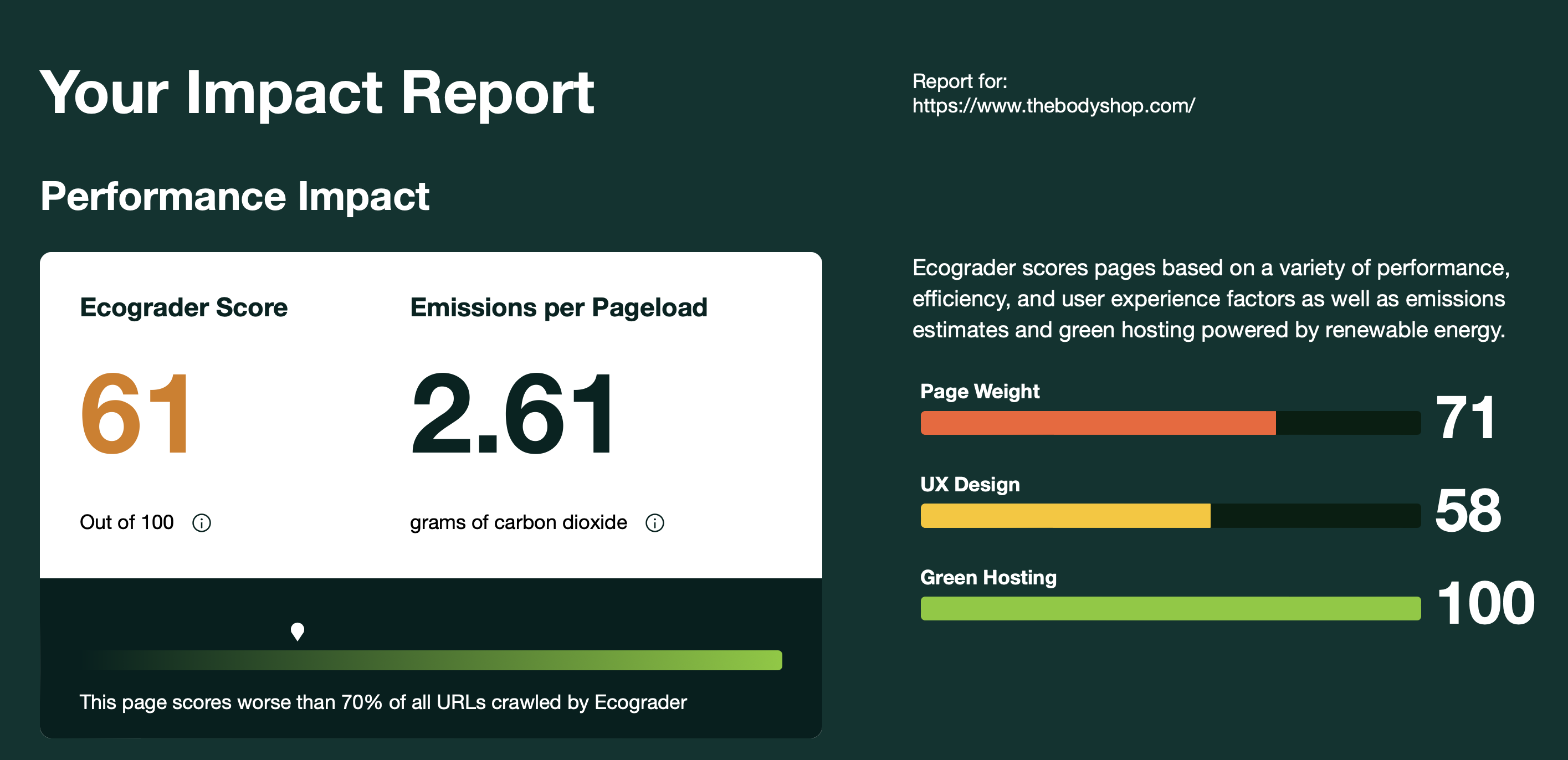
Despite strong environmental branding, the existing site produced high carbon output and relied on heavy layouts and inefficient interactions.
WebsiteCarbon results:
0.80g CO₂ per page view
Less efficient than 68% of websites tested
02 — Metrics
Measuring success
- Orders
- Order frequency
- Abandonment rate
- Error rate
- Session length
- SUS score
- NPS
- User feedback
03 — The Problem
Checkout created friction and waste
- Visual — Crowded layouts and unclear hierarchy
- UX — No progress indicators or feedback
- Interaction — High cognitive load
- Performance — Heavy media and unnecessary page loads
- Carbon — Inefficient design increasing energy use
04 — Research
Competitor insights
I analysed LUSH, The Ordinary, and Patagonia to understand how different brands balance sustainability, usability, and performance.
- LUSH — Strong sustainability messaging, inconsistent UX
- The Ordinary — Functional but dense and overwhelming
- Patagonia — Clear storytelling and efficient design
05 — Solution
A lighter, clearer checkout
- Design — Reduced visual noise and simplified layouts
- UX — Clear steps and progress indicators
- Interaction — Improved feedback and validation
- Performance — Optimised images and reduced assets
- Carbon — Fewer steps and lower energy usage